
About The Breed
The Devon Rex Breed History & Standard
The History of The Devon Rex
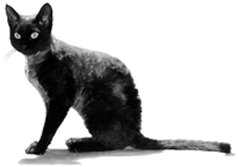
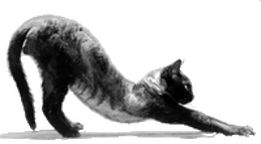
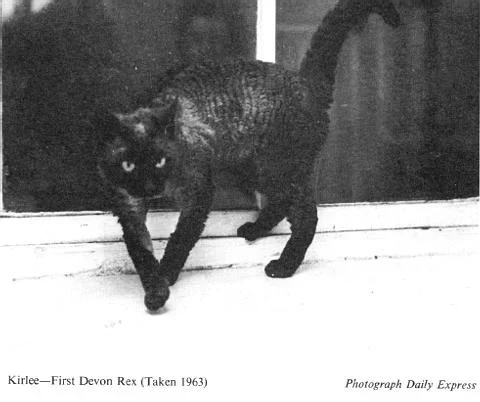
The story of the Devon Rex begins in 1959 in a garden in Devon, England. A woman named Beryl Cox discovered a kitten with an unusually soft, curly coat and named him Kirlee. It was soon determined that Kirlee’s curls were the result of a genetic mutation. At first, it was believed that this mutation was the same as, or related to, that of the Cornish Rex, which had been discovered a few years earlier in Cornwall, England.
To test this theory, Cox bred Kirlee with a Cornish Rex. However, the resulting kittens all had straight coats, revealing that Kirlee’s mutation was different from that of the Cornish Rex. Realizing the uniqueness of Kirlee’s genetics, Cox began a breeding program to preserve his distinctive trait. Kirlee was then bred with a domestic shorthair, producing a litter that included both straight-haired and curly-haired kittens. Through careful selective breeding of Kirlee’s descendants, Beryl Cox ultimately established the Devon Rex breed.
The International Cat Association (TICA) was established in 1979 and accepted the Devon Rex for championship status in the same year. It was also at this time that the names Devon Rex and Cornish Rex were formally chosen to distinguish the two different coat mutations.
Recognition by the Cat Fanciers’ Association (CFA) took longer. The CFA initially held the position that all rex-coated cats should be registered under the already accepted Rex breed, based on the Cornish Rex standard. Although Devon Rex cats could be registered, they were not recognized as a separate breed. Most Devon Rex breeders opposed this policy, resulting in minimal participation in CFA events during that period.
Despite these challenges, the breed continued to gain recognition. In February 1979, the CFA Board unanimously voted to grant the Devon Rex separate breed status, with registration effective immediately. The breed was later advanced to provisional status on May 1, 1981
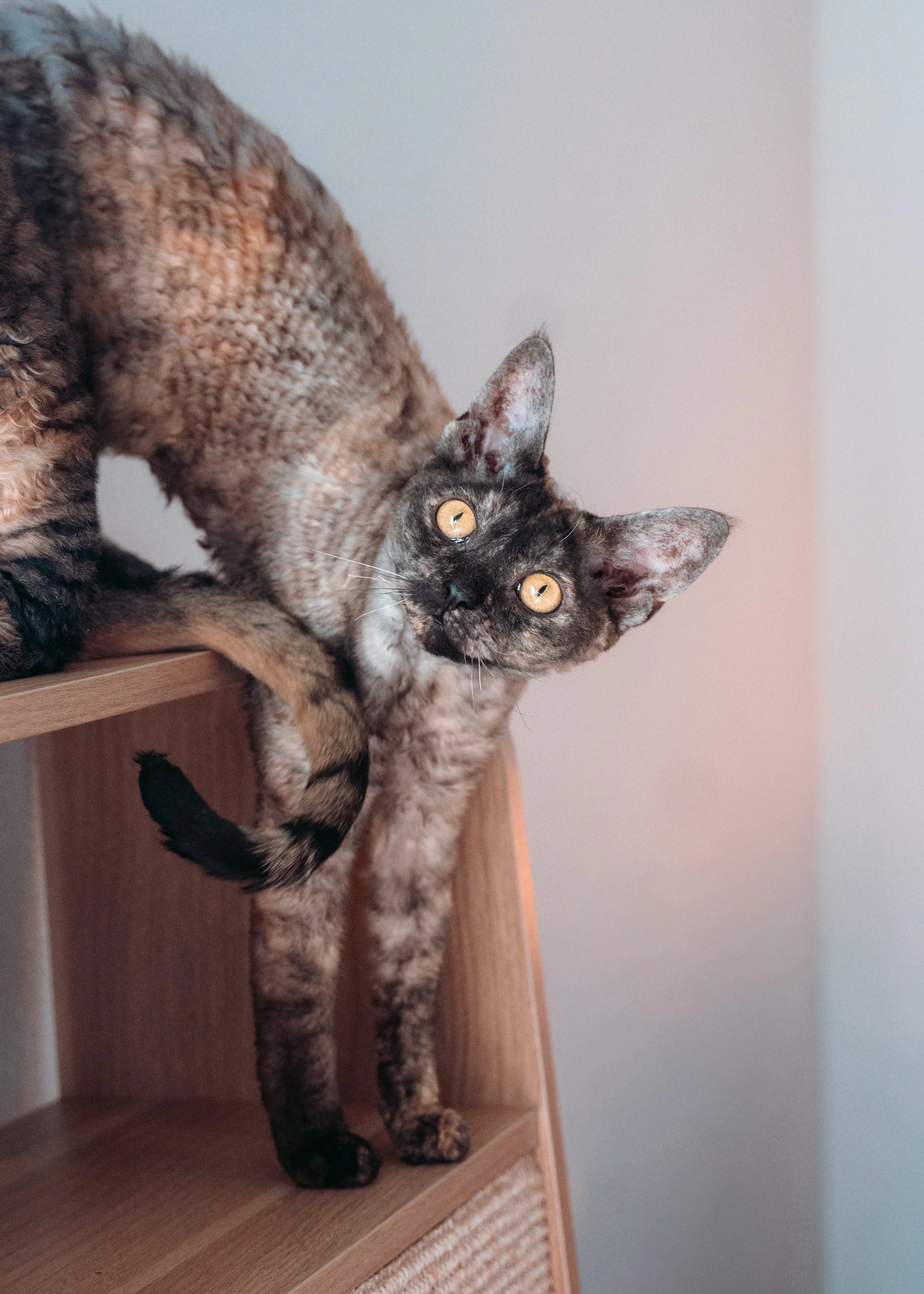
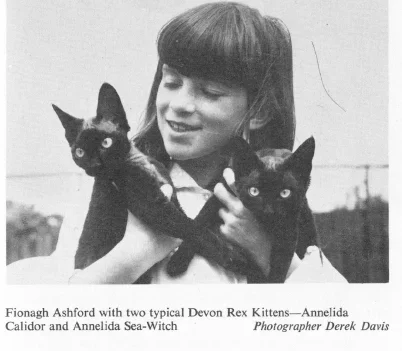
Often called the “pixies” of the cat world, the Devon Rex is a medium-sized breed with a muscular, balanced build and a soft, curly coat—its signature feature. This unique texture comes from a genetic mutation affecting all layers of the hair, giving the coat its distinctive waves.
The breed’s true hallmark is its unmistakable elfin face: large, low-set ears, prominent cheekbones, a short muzzle, and a slender neck. These features trace back to the original Devon Rex, Kirlee, and create a look that’s instantly recognizable, even from across the room.
Devon Rex cats come in all colors, adding even more variety and charm to this truly one-of-a-kind breed.
Breed Appearance
Temperament
The Devon Rex is best known for its big personality. Often described as part cat, part dog, and part monkey, Devons are highly social, playful, and deeply people-oriented. They love to be involved in everything you do and will happily follow you from room to room, offering quiet commentary along the way.
Intelligent and curious, Devons learn quickly and often enjoy games like fetching, climbing, and perching—then settling straight into your lap once playtime ends. They’re affectionate companions who thrive on interaction and attention.
True heat-seekers at heart, Devon Rex cats adore warmth and closeness, making laps their favorite place to relax. Constant, charming, and endlessly entertaining, they’re ideal for those who want a devoted, always-present companion.

Health concerns
The most prevalent health concerns in the Devon Rex include Congenital Myasthenic Syndrome (CMS), Hypertrophic Cardiomyopathy (HCM) and Polycystic Kidney Disease (PKD). Responsible breeders routinely test their breeding cats for PKD and CMS and regularly perform annual echocardiograms to screen for potential heart defects. Devon Rex cats are also prone to allergy-related issues. While allergies have a genetic component, they can often be managed successfully with appropriate diet and care. Reducing the incidence of allergies within breeding lines remains an important goal for many conscientious breeders.
The Breed Standard
-
The Devon Rex is a cat of unique, elfin appearance. Large eyes, prominent cheekbones, a short muzzle, and huge low-set ears define the breed’s expressive look. The body is medium in size, muscular yet slender, and covered in short, wavy fur of a distinctive texture found in no other breed. Devons are alert, active, and people-oriented, showing a lively interest in their surroundings.
-
The head is a modified wedge with very full cheeks. From the front, the face shows three distinct convex curves: the outer edge of the ears, the cheekbones, and the whisker pads. The forehead curves smoothly from a defined stop into a flat skull. The head is comparatively small, enhancing the breed’s pixie-like expression.
-
Ears are one of the Devon Rex’s most striking features. They are very large, low-set, and wide at the base, tapering to rounded tips. Fine fur covers the ears, with sparse furnishings allowed. Ear tufts or “ear muffs” may be present but are not required. Sparse hair on the temples is not considered a fault.
-
The neck is medium-long and slender, flowing smoothly into the body and enhancing the breed’s elegant appearance.
-
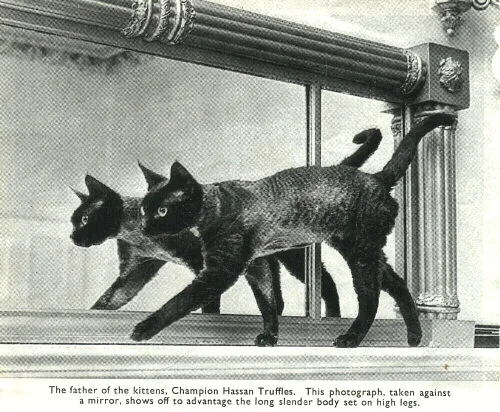
Legs are long and fine-boned, with the hind legs slightly longer than the front. Feet are small and oval, adding to the breed’s refined look.
-
The coat is fine, dense, and wavy, with a full-bodied rexed appearance and no guard hairs. When smoothed by hand, a rippled wave effect should be visible, especially on the body and tail.
-
All colors, patterns, and divisions are accepted. Eye color generally corresponds with coat color. Lockets are allowed.
-
Devon Rex males may be up to 25% larger than females without fault, provided proper proportions are maintained. Balance and type are always prioritized over size.
-
Eyes are large, wide-set, and oval, sloping gently toward the outer edge of the ears. Any eye color is acceptable and generally complements the coat color. The eyes contribute greatly to the breed’s open, mischievous expression.
-
The muzzle is short and well-developed, with a strong muzzle break and prominent whisker pads. The chin is firm and well-defined, contributing to balanced facial structure.
-
The profile features a strongly marked stop, a hallmark of the breed. This distinct break between the forehead and nose is essential to correct Devon Rex type.
-
The Devon Rex has a hard, muscular body with a slender shape and medium length. The chest is broad, and the cat is carried high on long legs. Despite their delicate appearance, Devons are strong and athletic.
-
The tail is long, tapering, and medium fine-boned, well covered with short fur. It should never appear bare, bushy, or kinked.
-
The coat is short overall:
Short on the back, sides, upper legs, and tail
Very short on the head, ears, neck, paws, chest, and abdomen
Kittens may have very short or uneven coats during development. As long as the fur covers the body evenly with no bare patches, this is acceptable and expected.
-
The greatest coat density appears on the back, sides, tail, legs, face, and ears. Slightly less density is permitted on the head, neck, chest, and abdomen. Down on the underparts is normal and should not be mistaken for baldness. Bare patches are a fault in kittens and a serious fault in adults.
-
Temperament must be unchallenging. Fear or vocal complaints are acceptable, but threatening behavior or aggression results in disqualification. The Devon Rex is known for its friendly, people-focused nature.
Faults, Penalties & Disqualifications
Devon Rex cats may be penalized for traits that detract from correct breed type, including a narrow, long, or overly domestic head; ears that are small, set too high, or flared; a misaligned bite; a short, bare, or bushy tail; a straight or shaggy coat; or the presence of bare patches. Extensive baldness results in withholding of all awards. Disqualifications include weak hind legs; blue or odd eyes in cats that are not dominant white, white, or pointed; and serious structural or genetic faults as defined by show rules, including missing tail (unless permitted by the standard). Temperament is also critical—while fear or vocal protest is acceptable, any cat showing aggression, intent to harm, or definite challenge is disqualified.

For the full breed standard, click the TICA icon