
How to Spot Scams
And What to Look For In A Breeder
Common Types of Devon Rex Scams
Understanding the most common scam formats can help you avoid them entirely:
Fake Breeder Websites: Professional‑looking websites using stolen photos and fabricated reviews.
Social Media Imposters: Fake profiles copying real breeders’ names, logos, or photos.
Deposit‑Only Scams: After a deposit is sent, the seller disappears or invents endless fees.
Shipping Scams: Claims that a kitten is being shipped, followed by fake transport or insurance charges.
Misrepresentation Scams: Kittens sold as Devon Rex that are mixed breed or not health tested.
1. Prices That Are Too Good to Be True and kittens always available
Ethically bred Devon Rex kittens are never cheap. Proper health testing, quality nutrition, vet care, and responsible breeding all come at a cost.
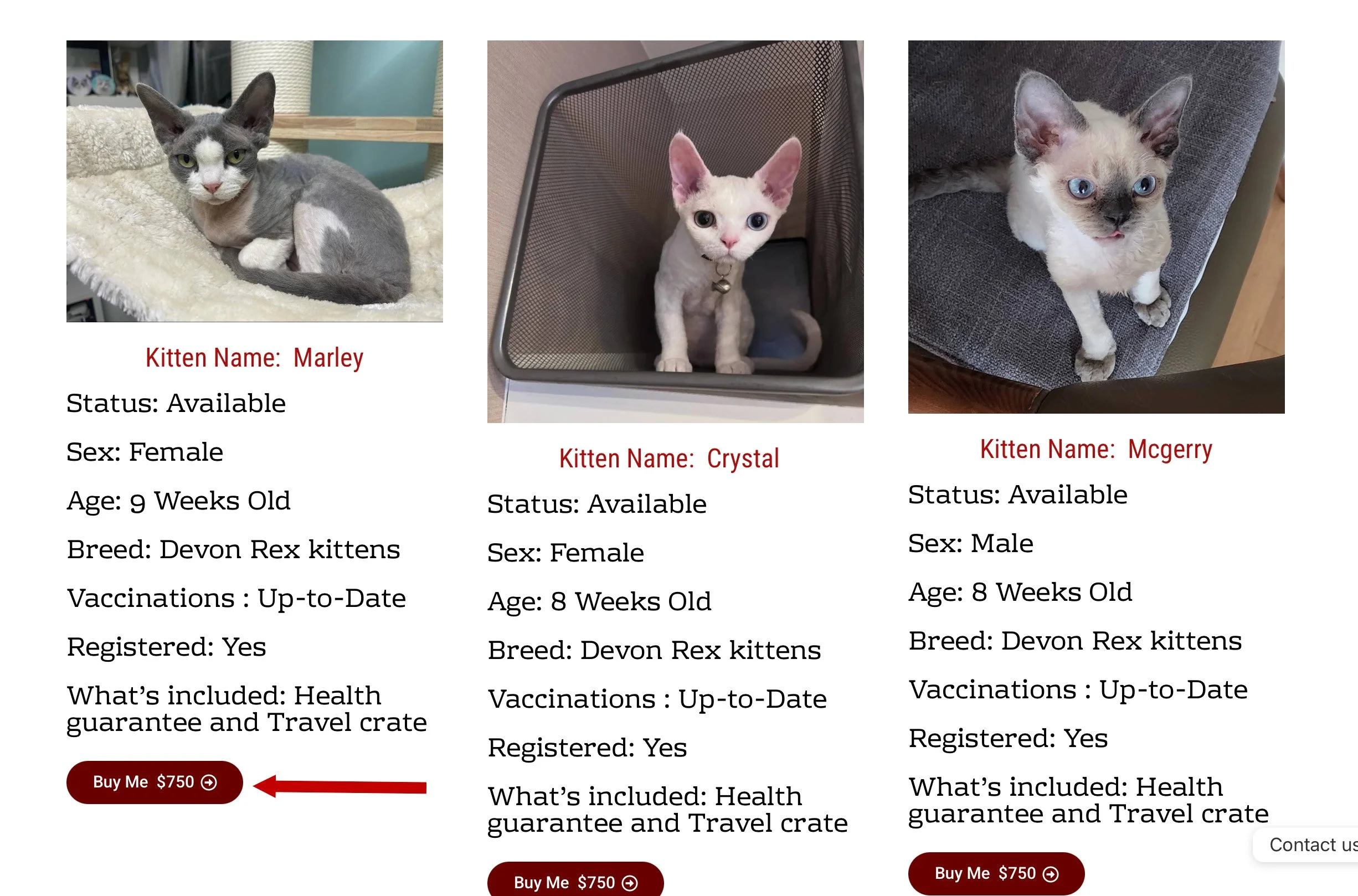
Red flag: Prices far below the typical Devon Rex range, especially if paired with pressure to “act fast”, usually with a “buy now” button. These scam pages will always have kittens available on their page. Sometimes those same cats will remain as available year after year and never change.
2. No Proof the Actual Kittens exist in their cattery
Scammers often steal photos from real breeders’ websites or social media pages.
Red flag:
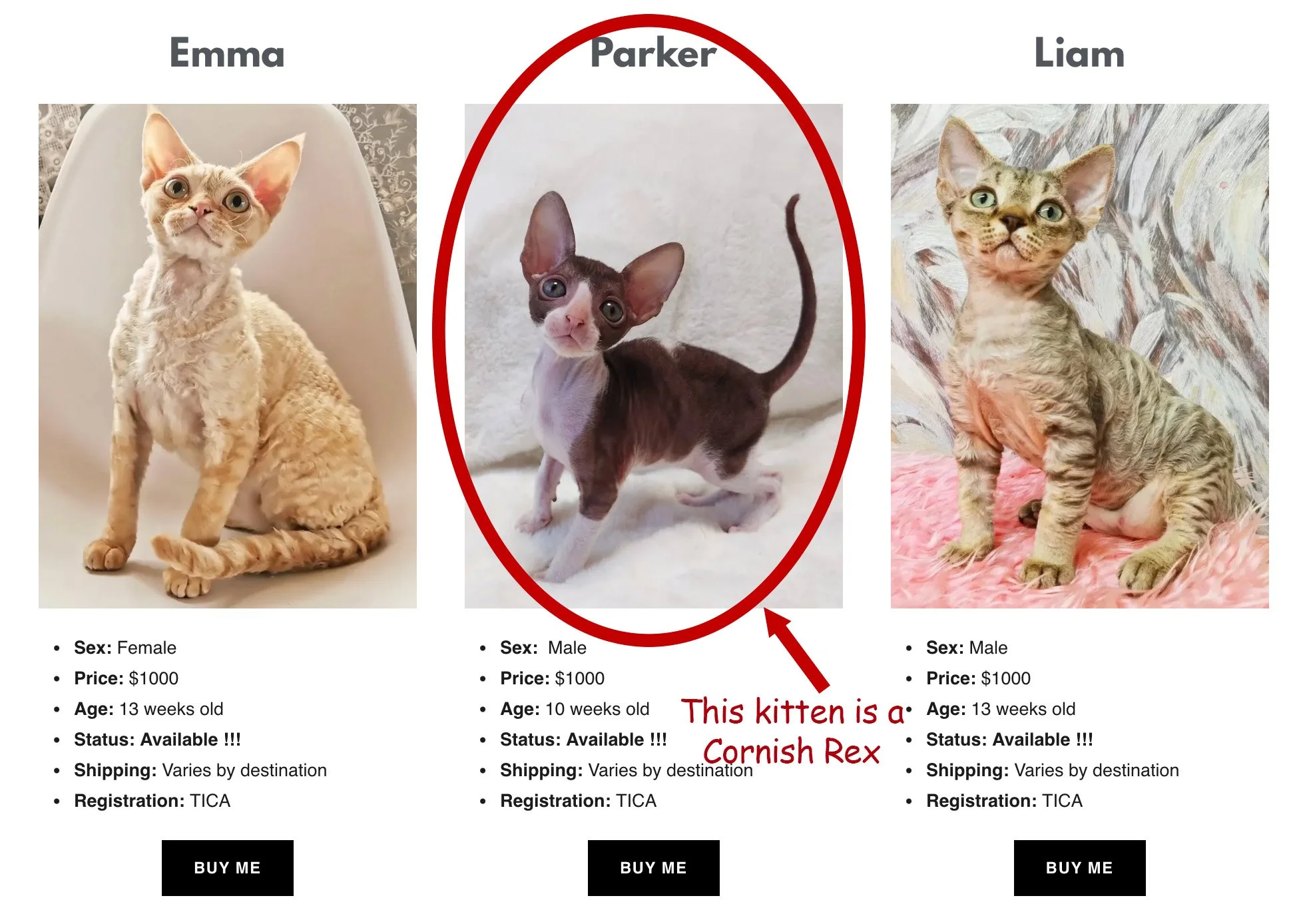
Photos of kittens all have different backgrounds
They can only provide one photo of the kitten at one age. Real breeders will have many photos of the kitten from birth.
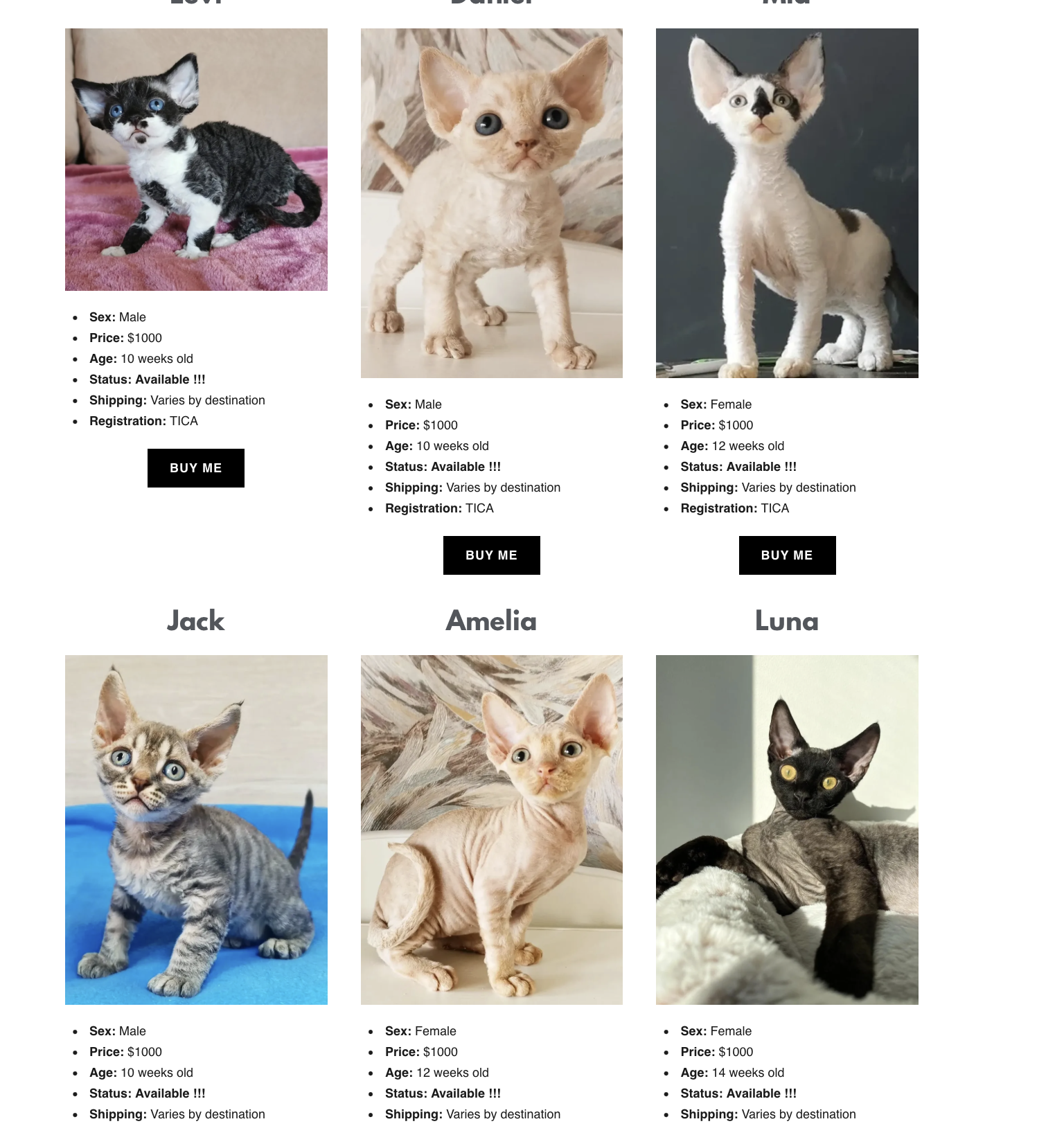
Age of kitten in photo doesn’t match age of listed cat.
No videos showing the kitten with the breeder
Photos that look overly polished, cropped, or inconsistent
What to look for: Look at backgrounds and examine photos. Do markings of kittens match in all photos of that kitten? Does that background in your kitten photo show up anywhere else on their page? Does the age and breed of the cat match what's advertised?
What to ask for: A short video with the kitten’s name, date, or your name spoken or written. Ask for a FaceTime to see the kitten.
3. Mistakes on their website
A a real breeder’s website will have information about their cattery and breeding program.
They will have photos of their breeding females and males, often with championship titles and health testing.
They will have information about expected litters or planned breeding.
Red flag:
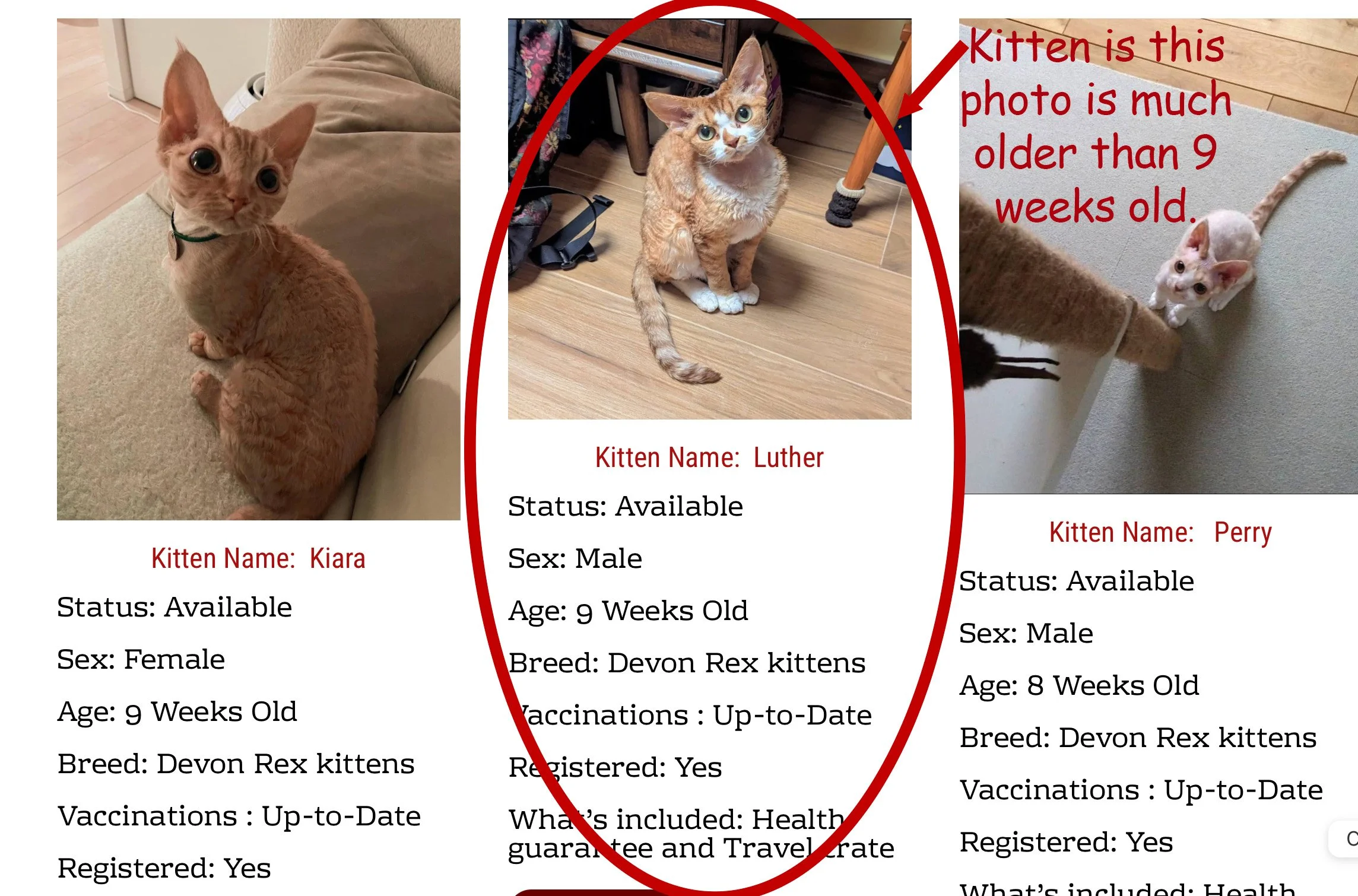
Cattery is not the same listed in multiple places on their website
Their website matches or closely resembles other pages.
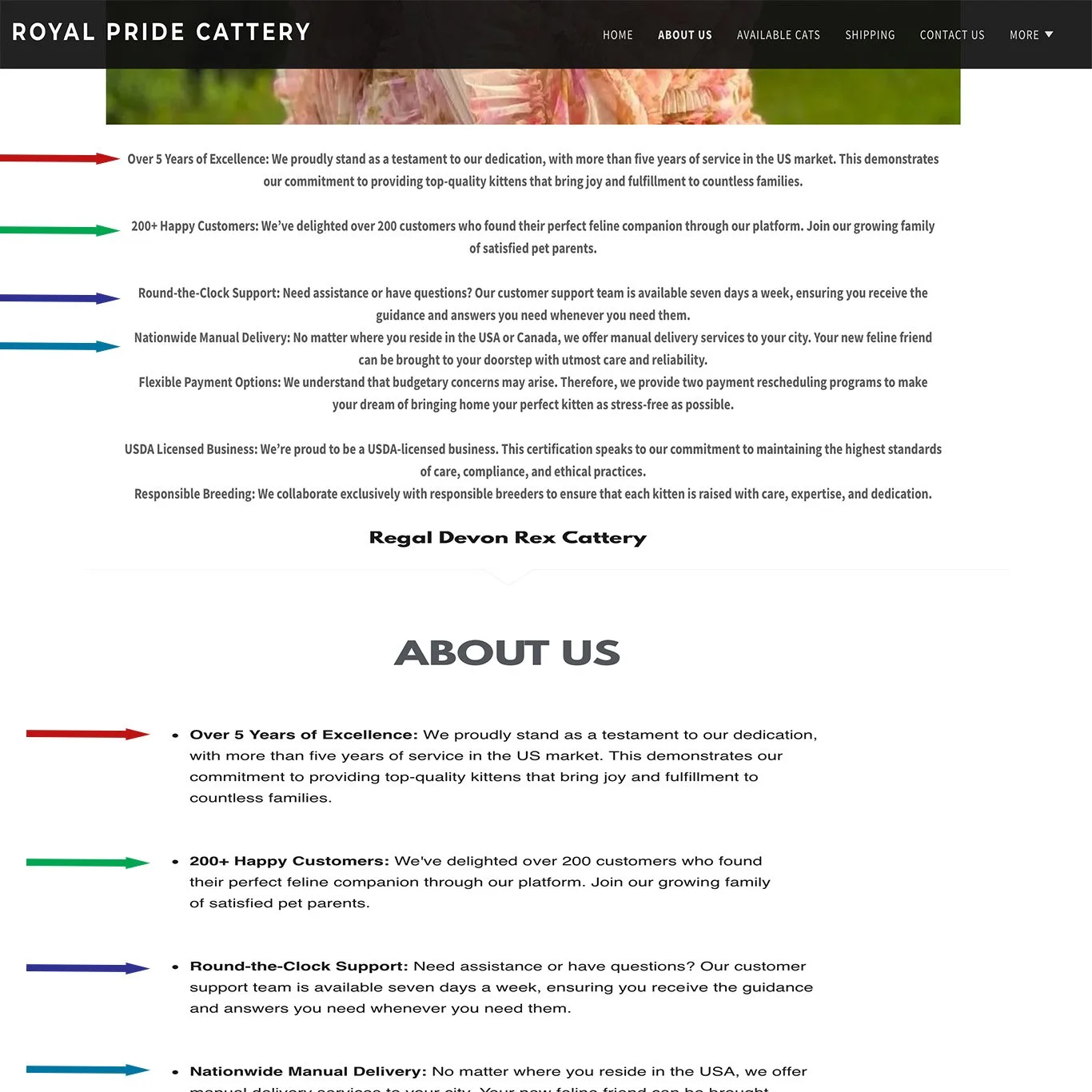
Spelling and grammar mistakes or places were “puppy” is used instead of kitten.
Other breeds listed or in photos/graphics.
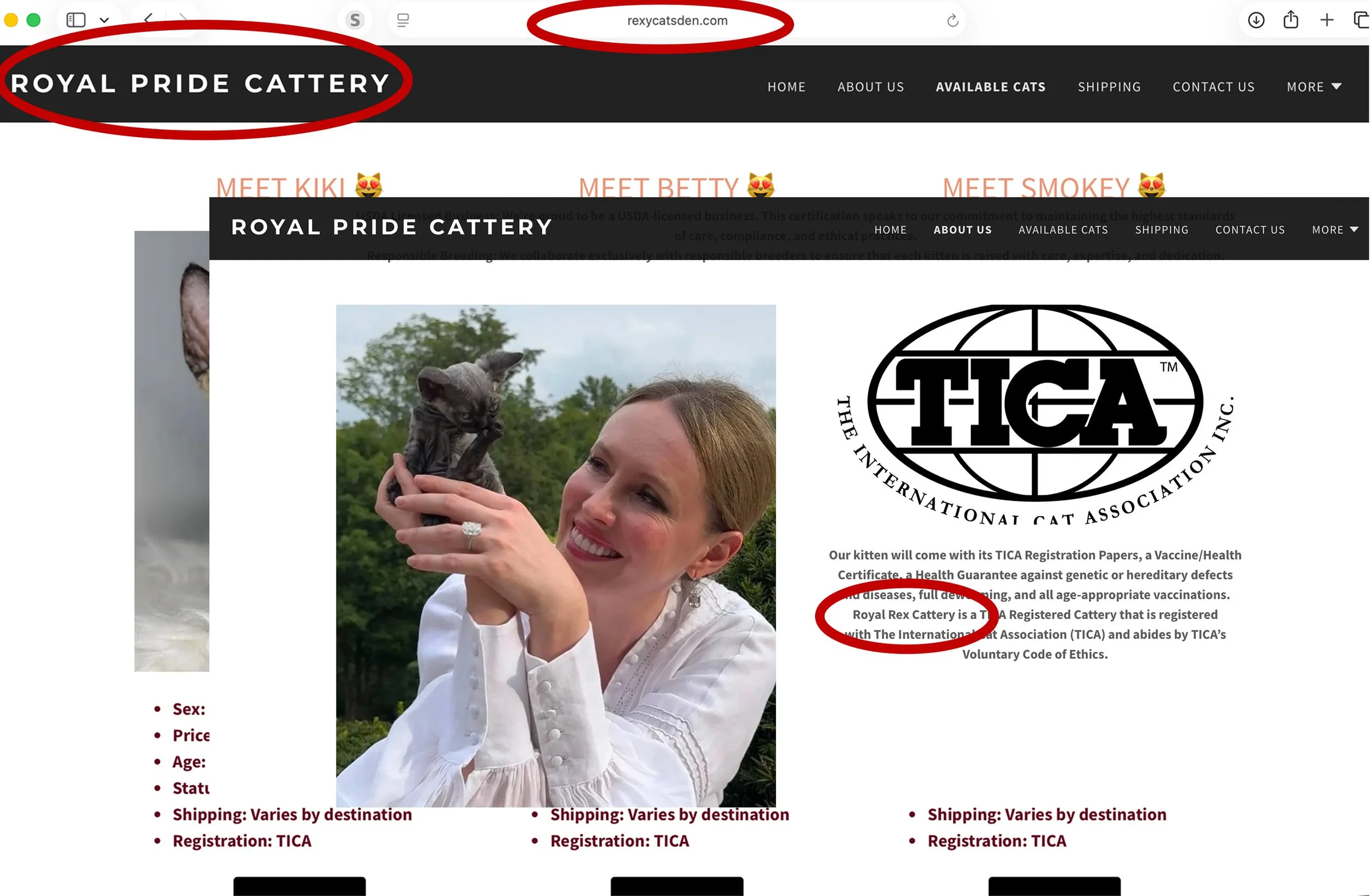
If you look closely, this website has three different cattery names on it, Royal Pride Cattery, rexycatsden and Royal Rex Cattery. This website was likely copied in multiple scam pages.
4. Limited Interaction
Ethical breeders expect questions — and welcome them. They want you to ask questions and they will ask you questions about your family.
Red flag:
Vague answers about health, parents, or upbringing
Will not produce proof of parents, health testing or pedigree and will rush you to make your deposit.
Getting defensive when you ask about genetic testing or vet care
Avoiding phone or video calls
5. Websites are similar to other cattery pages
Reputable breeders will have a unique and comprehensive website highlighting their breeding cats and their program.
Red flag:
Available cat pages are similar in layout with similar information.
Description of their cattery mirror other cattery pages.
6. No Application Process
A reputable breeder cares about every single kitten they create and we want to ensure our kittens are going to the best homes possible.
Red flag:
“Buy now” buttons
No application process
No interviews with potential kitten buyers
7. Multiple Breeds, Always Available
Quality breeders focus on one (or very few) breeds and have planned, limited litters.
Red flag:
Always having kittens available
Breeding multiple unrelated breeds
Having a large list of available kittens
What to Look For in A Devon Rex Breeder
Choosing the right breeder can take some time but it is one of the most important steps in bringing home a happy, healthy Devon Rex. Because this breed is unique and highly sought after, it attracts both dedicated hobby breeders and opportunistic sellers, some of whom may be unethical or outright scams. Use this checklist to evaluate breeders confidently and protect yourself and your future pet.
1. Transparency and Willingness to Be Seen
Ethical breeders have nothing to hide.
A reputable Devon Rex breeder will:
Freely share photos and videos of their actual cats and kittens
Clearly show adult breeding cats, not just kittens
If in person visits are not an option, breeder will offer live video calls
Be comfortable showing their home or cattery environment through video calls and photos
Breeders who actively show their cats in conformation shows demonstrate a deeper commitment to the breed standard, health, and temperament. Showing cats requires independent evaluation by licensed judges and ongoing investment in the quality of their breeding program.
2. Health Testing and Veterinary Care
Ethical Devon Rex breeders prioritize health above profit.
You should expect:
Genetic and health testing on breeding cats for known Devon Rex concerns
Routine veterinary care, vaccinations, and parasite prevention
Written health records provided before a kitten goes home
Health testing should be verifiable — not just promised.
3. Registration and Documentation
Reputable breeders are transparent about registration.
They will:
Be registered with recognized cat associations (such as TICA or CFA)
Provide registration documentation for kittens and parents
Clearly explain what registration does and does not mean
Registration alone does not equal quality, but ethical breeders are open and honest about their credentials.
4. Written Contracts and Health Guarantees
A responsible breeder always uses a written contract.
This typically includes:
A health guarantee
Return or take‑back policy if circumstances change
Clear buyer and breeder responsibilities
Contracts protect the kitten first — and both parties second.
5. A Two‑Way Screening Process
Ethical breeders carefully choose homes for their kittens.
Expect the breeder to ask questions about:
Your lifestyle and household
Other pets in the home
Your experience with cats
Your expectations of the Devon Rex breed
A breeder who sells without screening is not prioritizing the kitten’s future.
6. Limited, Purposeful Breeding
Quality Devon Rex breeders focus on planned, intentional litters.
Signs of responsible breeding include:
Limited number of litters per year
Practice early spay and neuter meaning cats do not leave their cattery unaltered.
Breeding for health, temperament, and structure — not constant availability
Always having kittens available is often a warning sign.
7. Ethical Payment Practices
A trustworthy breeder is clear and professional about finances.
Look for:
Clear deposit terms and timelines
No pressure to send money immediately
Ethical breeders do not rush buyers or demand immediate payment.
8. Ongoing Support and Accountability
Reputable breeders stand behind their kittens for life.
They will:
Provide a thorough contract that outlines the terms and health guarantee
Remain available for questions after placement
Offer guidance on care, nutrition, and grooming
Require that the kitten be returned to them if rehoming is ever necessary
This lifelong responsibility is a hallmark of ethical breeding.
Final Thoughts
An ethical Devon Rex breeder is proud of their cats, transparent in their practices, and accountable for every kitten they produce. They will gladly show you their cats, both literally and figuratively, and welcome educated and thoughtful buyers.
Taking the time to choose the right breeder protects you, your future cat, and the Devon Rex breed as a whole.