
Understanding the Devon Rex Kitten Coat: Why the “Bald Phase” Is Completely Normal
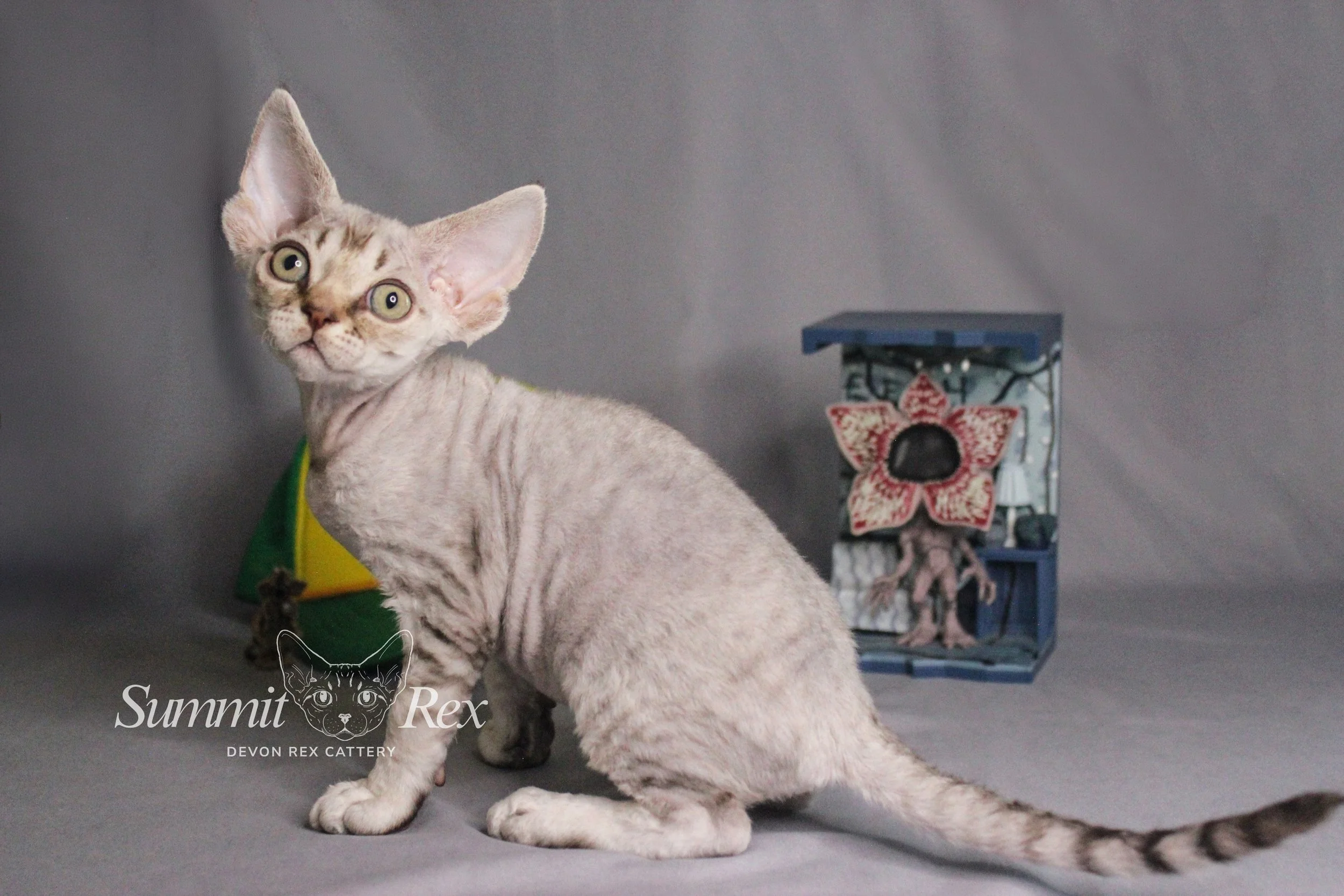
If you’ve ever met a Devon Rex kitten, you already know their coat is one of their most fascinating features. Soft, wavy, and unlike any other breed, the Devon Rex coat is part of what makes these cats so special. But what surprises many new owners is that this unique coat doesn’t stay the same throughout kittenhood.
At Summit Rex, our ethical Devon Rex cattery in Colorado Springs, we believe education is just as important as excellent care. One of the most common questions we hear is:
“Why does my Devon Rex kitten look bald?”
The short answer: it’s completely normal.
Let’s take a closer look at the stages of the Devon Rex coat and what to expect as your kitten grows.
The Unique Devon Rex Coat
Devon Rex cats have a very different coat structure than most breeds. Instead of the typical three layers of fur (guard hairs, awn hairs, and down hairs), Devon Rex cats primarily have soft down hair, which creates their signature rippled or curly texture.
Because this coat is delicate and slow to mature, Devon Rex kittens go through several noticeable changes during their first year of life.
Stage 1: The Baby Coat (Birth to ~8 Weeks)
Devon Rex kittens are often born with a surprisingly plush or velvety coat. Some may even appear quite curly at first. This “baby coat” is temporary and can give new owners the impression that their kitten will stay fluffy forever.
At this stage:
The coat feels soft and warm
Curls may be visible on the body or tail
Whiskers are often curly or crinkled
Stage 2: The Coat Drop (2–6 Months)
This is the phase that causes the most concern—and the most emails.
Between about 2 and 6 months of age, many Devon Rex kittens lose most or all of their coat. Some kittens look patchy, fuzzy, or nearly hairless, especially on the head, neck, belly, and legs.
This is normal, healthy, and expected.
During this phase:
The kitten may look “bald” or uneven
Fur loss can happen gradually or seemingly overnight
Skin may be visible, but should be clean and healthy
This coat drop is not caused by stress, illness, or poor care—it’s simply part of how the Devon Rex coat develops.
Stage 3: The Awkward Teen Phase (6–12 Months)
As your kitten grows, the adult coat begins to come in—slowly.
During this stage:
Fur regrowth may be uneven
Some areas fill in faster than others
Texture may vary across the body
Curls may appear faint or loose at first
Many Devon Rex cats don’t reach their full coat potential until 12 months of age or later. Some even continue to improve well into adulthood.
Stage 4: The Adult Coat (1 Year and Beyond)
By around one year old, most Devon Rex cats develop their mature coat:
Soft, wavy, or curly texture
Thin but warm and plush to the touch
Variations in density depending on genetics
Even as adults, Devon Rex coats can change slightly with seasons, hormones, or age. No two coats are exactly alike, and that individuality is part of the charm of the breed.
What’s Normal—and What’s Not
✔ Normal
Patchy or minimal fur in kittens
Bald-looking areas before 1 year
Slow or uneven coat regrowth
✖ Not Normal
Red, irritated, or inflamed skin
Excessive scratching or sores
Signs of illness or discomfort
At Summit Rex, all of our kittens are carefully monitored for health, skin condition, and development. A coat change alone is not a cause for concern.
Embracing the Devon Rex Journey
The Devon Rex is not a breed for those seeking instant fluff—but for those who appreciate a cat that grows, changes, and surprises you along the way.
That temporarily bald kitten will become a warm, curly companion with a coat as unique as their personality.
If you’re considering a Devon Rex or already welcoming one into your home, trust the process—and enjoy every stage.
For more education, ethical breeding practices, and available kittens, follow Summit Rex in Colorado Springs or reach out with questions. We’re always happy to help guide you through life with this extraordinary breed.